


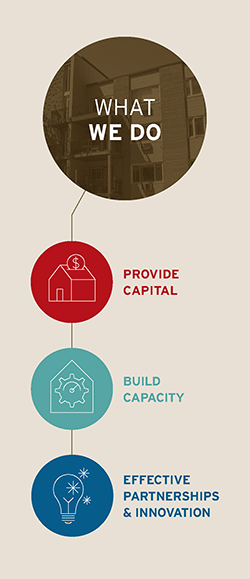
We support the development of STRONG COMMUNITIES and AFFORDABLE HOMES through access to LOW-COST CAPITAL, EFFECTIVE PARTNERSHIPS, and INNOVATIVE SOLUTIONS to local housing needs.
From the President and Board Chair
2025 was a busy, successful, and at times, challenging, year for GMHF. We delivered on an ambitious work plan, including surpassing lending and equity investment goals, maintaining our financial strength, and advancing our mission to support strong communities and affordable homes for all Minnesotans.
Our team moved into a new office and immediately opened our space to host our partners. We also showed up across the state — leading or participating in 50+ convenings statewide. We engaged stakeholders to shape our new four-year Strategic Plan and released our Pairing Emerging Developers with NOAH Preservation report, contributing to field learning for both emerging developers and naturally occurring affordable housing preservation programs.
We secured nearly $20M in grant funds, including a $16M commitment from Minnesota Housing’s Homeownership Investment Grant (HIG). This award will help us accelerate the production of affordable homeownership opportunities, especially in Greater Minnesota and Tribal communities. Plus, as a Community Development Financial Institution (CDFI), every HIG dollar can leverage an additional $2 in private capital.
In partnership with the Federal Home Loan Bank of Des Moines, we leveraged $750K in matching funds to provide nearly $1.5M in grants to support work across the housing continuum at 11 housing organizations statewide.
Our policy work advanced pragmatic, coalition driven solutions to support Minnesota’s affordable housing ecosystem. We prioritized stabilizing nonprofit providers through the Housing Stability Coalition and elevated other thoughtful solutions aimed at increasing housing access and removing barriers to development.
We invite you to explore more of our impact in this report. As we approach GMHF’s 30th anniversary in 2026, we are energized to build on this momentum and celebrate three decades of advancing safe, stable, affordable homes with our partners.

Andrea Brennan
President & CEO

Stephanie Cummings
Board Chair
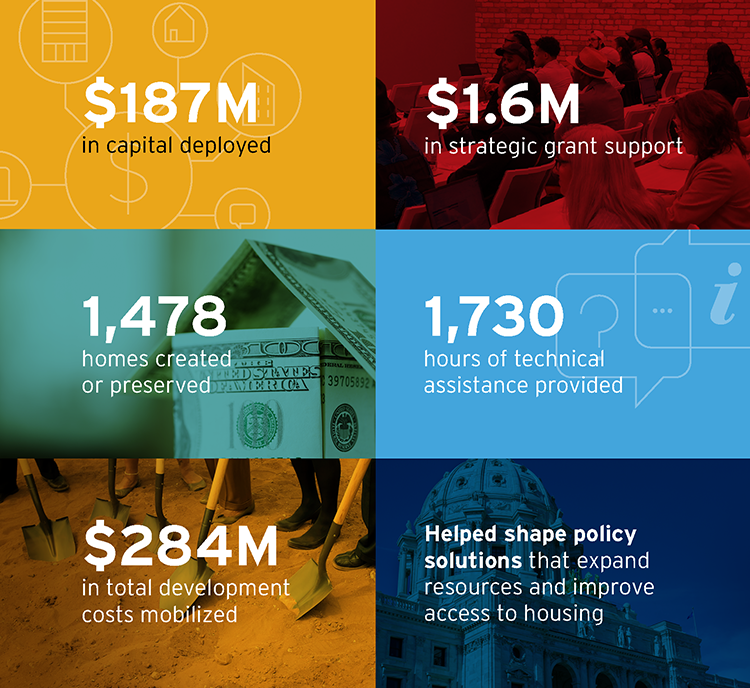
GMHF’S IMPACT IN 2025
All Minnesotans deserve access to a safe, stable, affordable home. In 2025, GMHF continued to leverage knowledge, relationships, and capital resources to effectively serve the entire continuum of housing needs in rural, Tribal, urban, and suburban communities in all 87 Minnesota counties.
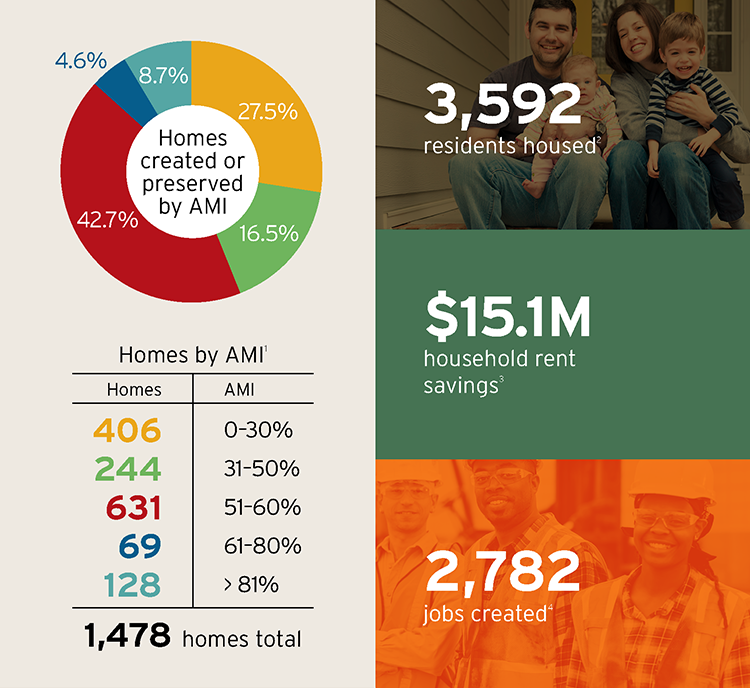
1 Source: U.S. Department of Housing and Urban Development – AMI (Area Median Income) is calculated by county. In 2025, AMI for a household of 4 in Minnesota ranged from $69,500 to $132,400 and averaged $102,889.
2 Source: U.S. Department of Housing and Urban Development – Average household size in Minnesota was 2.43 people in 2025.
3 Source: U.S. Department of Housing and Urban Development – Housing Impact Analysis 2025.
4 Job impacts were estimated using IMPLAN input‑output economic modeling for residential construction, a CDFI Fund accepted methodology.
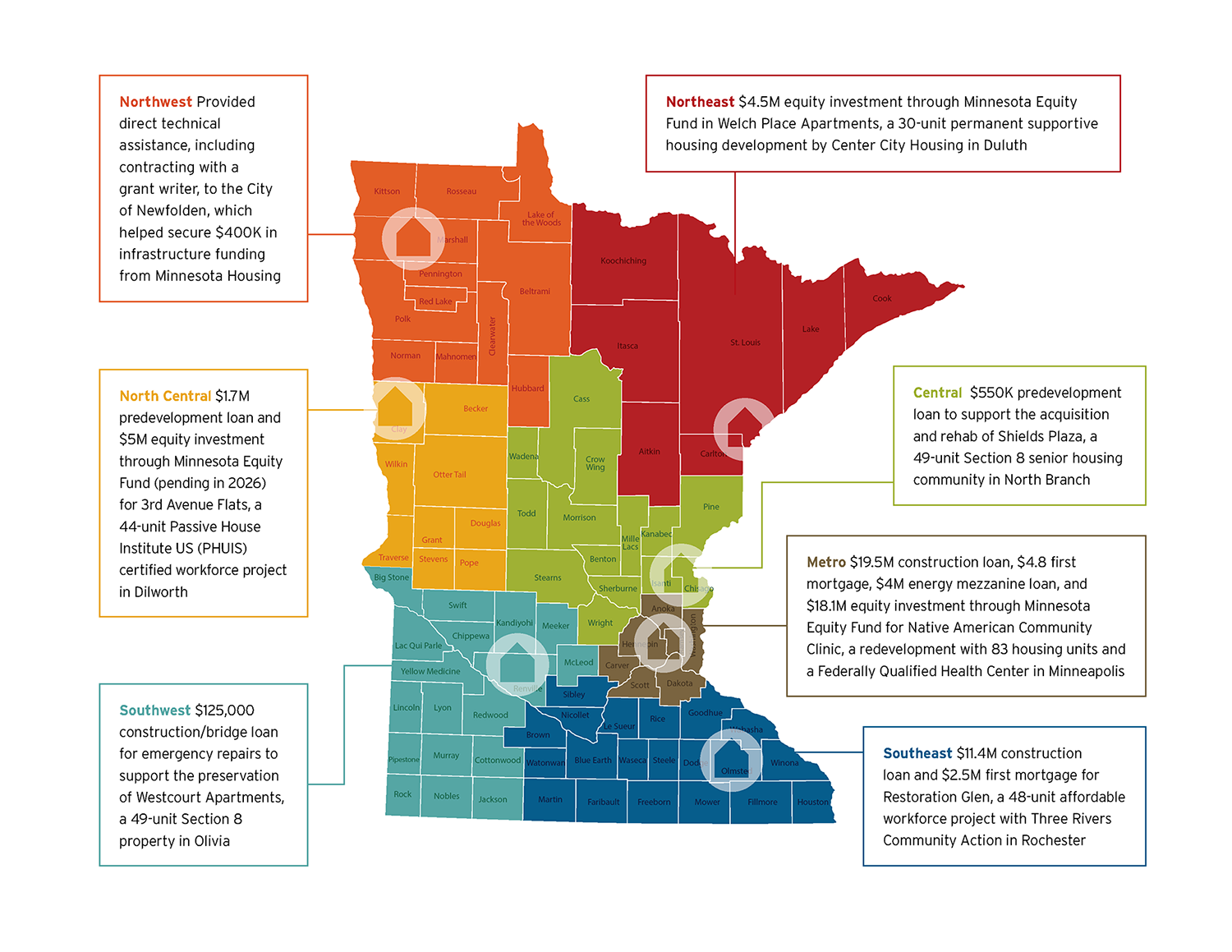
See how GMHF has invested in and supported projects across Minnesota in 2025:
GMHF’S IMPACT OVER TIME
GMHF was founded on a vision shared by the McKnight Foundation and the Blandin Foundation to create a responsive, innovative intermediary capable of addressing Minnesota’s unique affordable housing needs.
Today, GMHF is a strong Community Development Financial Institution (CDFI) that assembles social impact capital from philanthropy, government, financial institutions, and other private investors to scale and multiply impact to create and preserve homes across the state.
Since 1996, GMHF has made over
$1.4B
in direct capital investments across all funds, creating
28,754 homes
for families, children, and individuals in low-income, cost-burdened households, with an estimated
$4.6B
of capital mobilized from all funders.
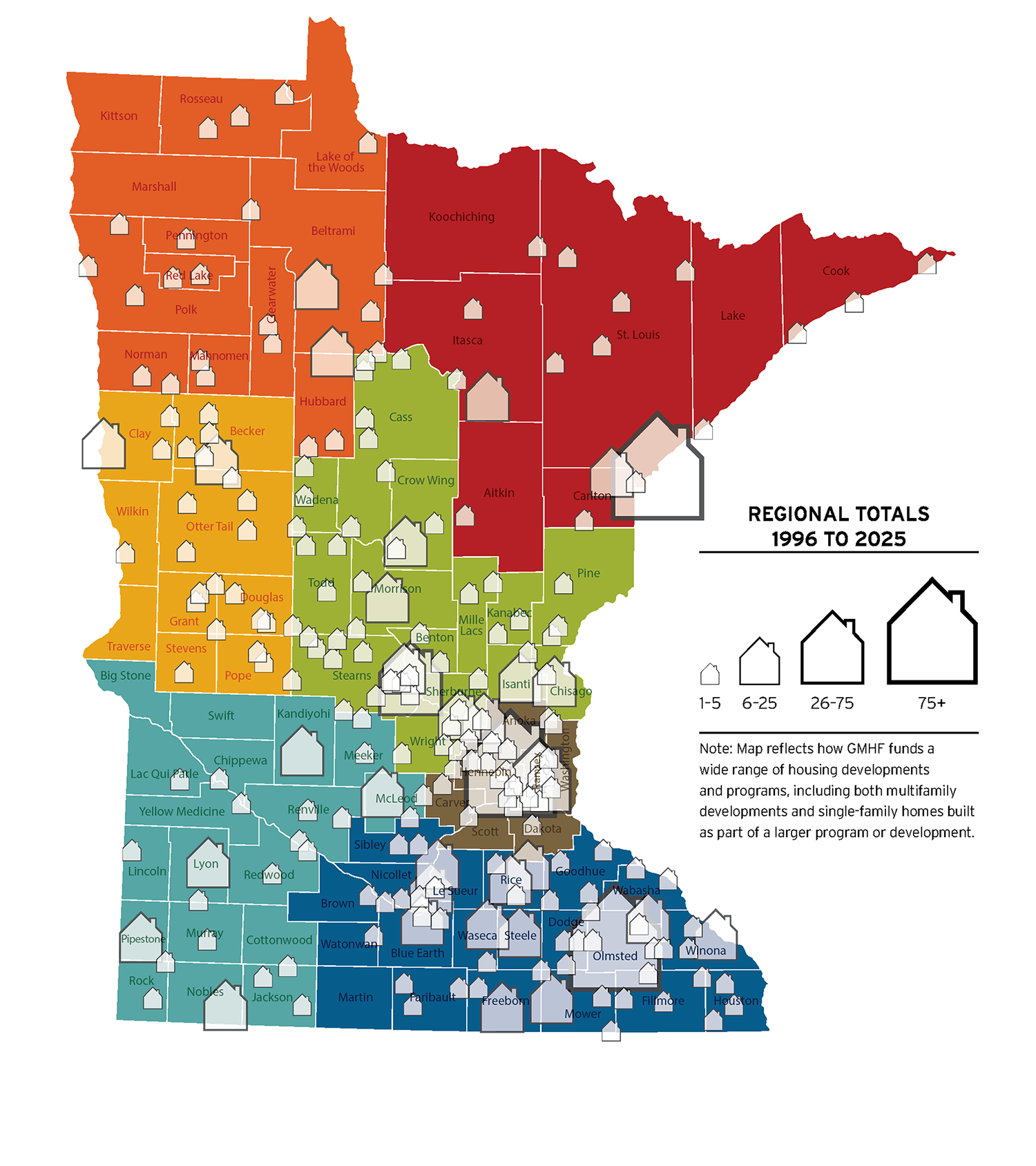

*Includes some duplication of homes supported by the Revolving Loan Fund, Minnesota Equity Fund, and/or the Emerging Developers Program.
Project spotlight
MINNESOTA INDIAN WOMEN’S RESOURCE CENTER (MIWRC)
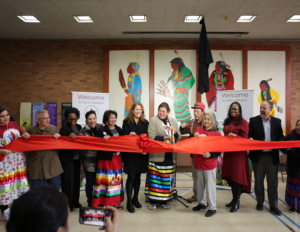
MIWRC celebrated the grand opening of Oshki-Gakeyaa, a 24-unit permanent supportive housing community in the East Phillips and Ventura Village neighborhoods of Minneapolis, on November 13, 2025.
Oshki-Gakeyaa — meaning New Way — provides safe, newly renovated homes paired with practical, trauma informed support services that promote long-term stability, wellness, and independence. Twenty units are dedicated to single adults experiencing homelessness, while four are reserved for individuals with disabilities.
The $14.1M development was made possible through a coalition of public and private partners. UnitedHealth Group served as the largest private investor, providing $9.4M in tax credit equity through Minnesota Equity Fund (MEF), a strategic partnership between GMHF and Cinnaire.
GMHF played a critical early role, providing MIWRC a $50K grant to support initial planning along with a $680K predevelopment loan to ensure sufficient operating capital to reach closing. In addition, GMHF provided a $4M construction loan for rehabilitation costs, thanks in part to a relationship with Allina Health forged through the Housing & Health Initiative.
“GMHF’s predevelopment financing filled a critical early‑stage gap for us and MEF’s tax credit syndication expertise helped ensure the project’s long‑term success,” said Ruth Buffalo, MIWRC’s CEO/President.
“Having the opportunity to work and live at MIWRC has changed my life for the better,” said Anthony LaBatte, a new resident who helped cut the ribbon during the event. “Thank you all so much for giving me a life.”

“The enlightened support of GMHF was crucial to MIWRC, a mission-driven organization with limited financial resources. Without the commitments from GMHF and MEF, the Oshki‑Gakeyaa project would not have been possible. These 24 units of much-needed housing would simply not exist without GMHF.”
Charles Ferrell, Board Secretary, MIWRC
REVOLVING LOAN FUND
The $220M Revolving Loan Fund (RLF) leverages low-cost capital to deliver flexible financial products that support the preservation and development of safe, stable, affordable homes across Minnesota with a focus in high job growth areas as well as smaller, underserved rural communities.
Through the RLF, developers can access predevelopment, acquisition, and construction financing at below-market interest rates to support multifamily rental developments and single-family homeownership projects.
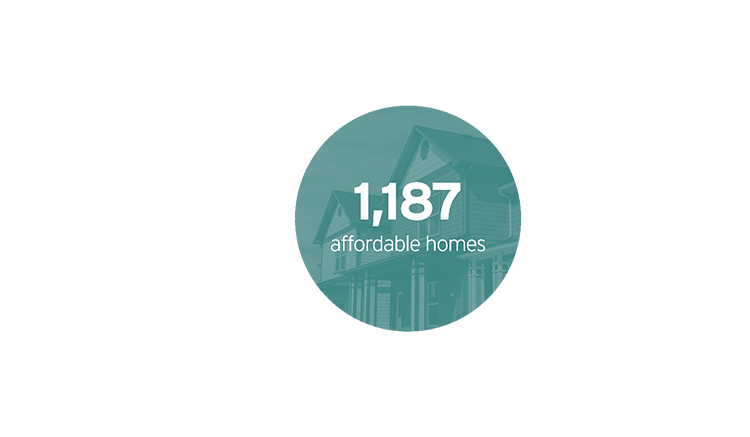
On average, GMHF closes $100M in loans each year to support more than 1,000 affordable homes statewide. In 2025, lending exceeded these levels, with $142M in loans closed to support 1,187 rental and homeownership units.

MINNESOTA EQUITY FUND
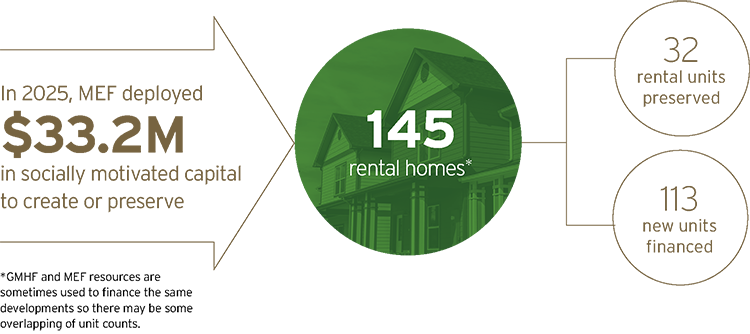
Minnesota Equity Fund (MEF) is a strategic partnership between GMHF and Cinnaire, a tax credit syndicator based in Lansing, Michigan. MEF connects investors and developers to create and preserve affordable housing throughout Minnesota and other targeted markets. Equity investments are provided by UnitedHealth Group and Cinnaire’s multi‑investor funds. MEF delivers competitive economic and social returns while financing affordable workforce, senior, and supportive housing developments.
MEF closed on three investments in 2025 and secured signed letters
of intent for another six projects that will close in early 2026.

NOAH IMPACT FUND
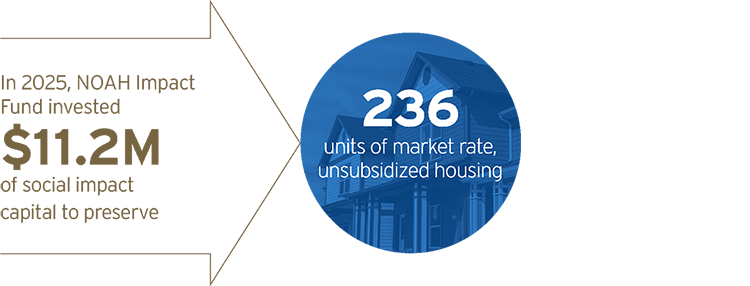
NOAH Impact Fund preserves naturally occurring affordable housing (NOAH) by connecting mission-driven owner-operators with social impact investors. The fund’s low-cost, patient capital allows it to compete in the market and preserve the affordability of acquired NOAH properties. Preservation of these units is critical for preventing displacement of low-income families and maintaining community assets as these properties age.
NOAH Pool I preserved 701 housing units, and NOAH Pool II, launched in 2024, is expected to preserve another 500+ units. In August 2025, NOAH Pool II closed its first transactions, investing $11.2M to acquire 236 units across three properties in Richfield in partnership with Hempel Companies. Remaining funds are expected to be deployed in 2026.
Thank you to NOAH Pool II’s investors: Bridgewater Bank, Bush Foundation, GMHF, Hennepin County, Highland Bank, Metropolitan Council, Minnesota Housing, Minnwest Bank, Ramsey County, and Sunrise Banks.
Project spotlight
BUILDING HOMES FOR LEECH LAKE TRIBAL MEMBERS
GMHF partnered with Leech Lake Financial Services (LLFS), a Native‑led organization serving members of the Leech Lake Band of Ojibwe, to expand affordable homeownership in some of northern Minnesota’s most rural communities.
Along with technical assistance from its Rural and Tribal Capacity Building Program, GMHF provided a $1M construction revolving line of credit to support the development of 15 single-family homes in Cass Lake, Deer River, and nearby areas.
As a new housing developer, LLFS lacked the track record needed to secure conventional financing, and the project’s modular construction added an additional risk that many lenders will not take on. GMHF stepped in with flexible lending solutions and leveraged philanthropic grant funds to write down the interest rate to terms even more favorable than what are typically available, resulting in more funds directly supporting the project.
In addition, GMHF provided an earlier $50K Emerging Developers Program grant and supported Minnesota Housing Partnership in delivering technical assistance to help LLFS secure a $2.7M award from Minnesota Housing for value gap and downpayment assistance.
LLFS is using these homes as demonstration projects and a wealth-building model for Tribal members. The pipeline of buyers comes from LLFS’s own homebuyer education training, which includes credit coaching and financial education.
With the first home sold in January 2026 and more nearing completion, this effort demonstrates GMHF’s role as a trusted CDFI partner — advancing innovative, community‑driven solutions and building a replicable model for rural and Tribal housing nationwide.


“The impact of this flexible capital is tangible — not just in the number of homes developed, but in the stability and well-being it brings to our community. We are proud to partner with GMHF in creating lasting, community-driven housing solutions.”
Rob Aitken, Executive Director, Leech Lake Financial Services
EMERGING DEVELOPERS PROGRAM
Since November of 2021, GMHF has offered a suite of services through its Emerging Developers Program (EDP) to build the capacity of new developers within the affordable housing field.
In 2025, the program provided:
- 11 predevelopment grants totaling $445K to advance projects across Minnesota
- Over 700 hours of technical assistance, including development, funding, and post-closing support
- In-person trainings, including the New Property Owner Seminar and Single-Family Pro Forma Workshop, which built capacity and knowledge for 116 emerging developers
In addition, the Lending team closed on over $25.7M in loans for 9 emerging developer projects. These investments spanned a range of housing types, including small NOAH acquisition and rehabilitation, multifamily and single-family new construction, and supportive housing.
In late 2025, the EDP team released the Pairing Emerging Developers with NOAH Preservation report, a comprehensive assessment of the challenges, opportunities, and recommendations needed to support emerging developers, particularly those seeking to acquire and preserve the affordability of small NOAH properties. GMHF will begin implementing these findings in 2026, starting with establishing the Emerging Developer Programs Coalition to promote better alignment within the ecosystem.
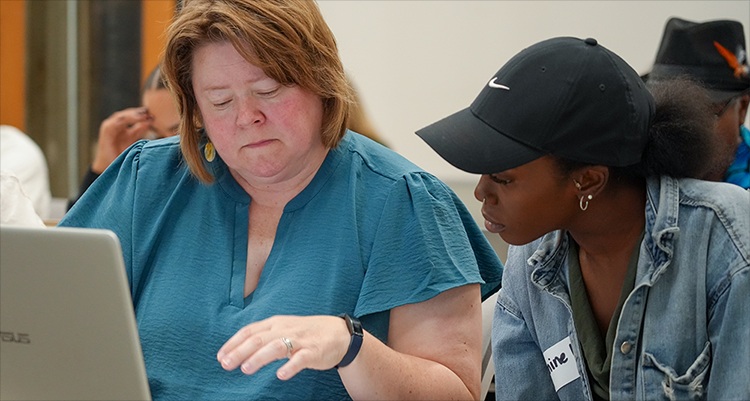
“One of the biggest obstacles is that we don’t lack the skillset; we lack the access to the funding to exercise our skillsets. That’s one thing that I was blessed with through GMHF… they didn’t invest in the project, they invested in me.”
Adriane Epps, CEO, TWOIE Construction
RURAL & TRIBAL CAPACITY BUILDING PROGRAM
This program helps bring affordable housing projects from concept to completion by offering technical assistance, planning support, and grant funding in rural and Tribal communities.
GMHF’s capacity building work reached a new
level in 2025, with:
- 795 hours of technical assistance delivered to 26 communities across Greater Minnesota
- Predevelopment support for 18 private, public, nonprofit, and Tribal developers
- Consultation on 50+ projects, representing over 800 housing units in the development pipeline
- $115K in program grants to six rural and Tribal organizations, leveraged with $89.5K in matching grant funds from Federal Home Loan Bank of Des Moines
This work is strengthened through collaboration with Minnesota Housing Partnership, Minnesota Housing, Community Economic Development Associates, Thrive Consulting LLC, Rippley Richard Real Estate Development Services LLC, and others, creating a more coordinated support system for rural and Tribal housing development.
“Without the technical assistance funded by GMHF, I would not have had the capacity to see funding streams through to closing … it will make a lot of difference to 48 families in Itasca County..”
Diane R. Larson, Executive Director, Itasca County HRA
Project spotlight
BELTRAMI COUNTY HOUSING ROUNDTABLE
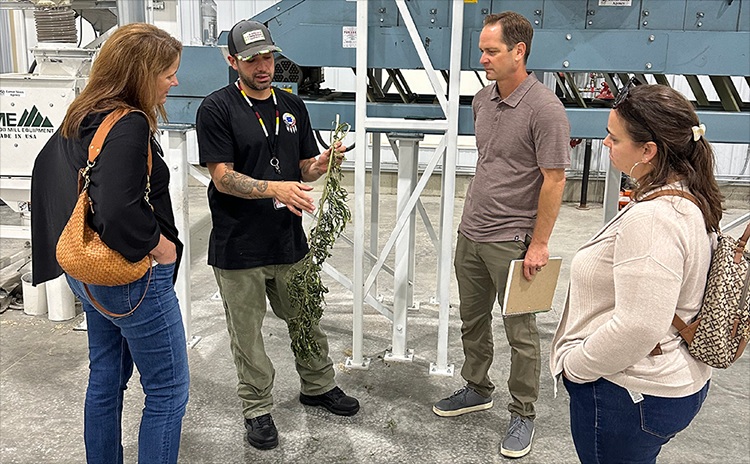
More than 100 leaders from across the housing spectrum came together on December 2, 2025 to discuss one of the region’s most urgent challenges: creating stable, affordable housing for all.
This convening grew out of a partnership between Greater Minnesota Housing Fund, Beltrami County, and Sanford Health, an active participant in GMHF’s Housing & Health Initiative.
GMHF and Sanford Health invested in a county‑wide housing study to better understand local needs and identify pathways forward. Insights from the study were presented by Maxfield Research during the event and underscored the urgency of the challenge: Beltrami County will need 6,264 new housing units by 2035 to keep pace with demand.
“The rate of housing units being constructed in the area will not meet the growing demand if we keep doing what we are doing now,” said Nate Dorr, GMHF’s Rural and Tribal Capacity Building Senior Program Manager. “We need a very focused effort by a multitude of partners to do business differently to meet our growing housing demands, preserve existing units, and keep housing affordable across the board.”
Panelists spoke candidly about barriers to development and emphasized the importance of public‑private partnerships in moving projects forward.
“The event sparked synergy around what has reached a crisis in Beltrami County. We saw developers, community organizations, and local government leaders share ideas and begin aligning around strategies that will help move housing projects forward,” said Anne Lindseth, Health and Human Services Director for Beltrami County.
GMHF remains committed to building on this momentum, working in close partnership with communities and stakeholders to deliver lasting affordable housing solutions across the region.

“The data made clear that we need every type of housing — and the summit created space for shared understanding and creative problem‑solving. By working together, we can find solutions to ensure every person has a safe, stable home. I am energized to move forward with this group and grow housing in our community.”
Kayla Winkler, Head of Market Affairs, Sanford Health Northern Minnesota
Project spotlight
PROGRAM-RELATED INVESTMENT SUPPORTS PRESERVATION
OF FAMILY-SIZED HOMES
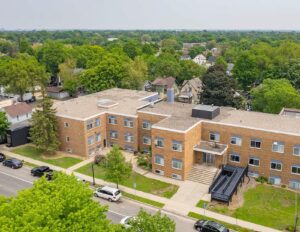
Thanks to a generous $635K program-related investment (PRI) from the Graves Foundation, GMHF was able to support James Crumble, a local emerging developer, with acquiring, upgrading, and preserving 29 family-sized apartments in Minneapolis.
70% of these homes have three bedrooms — a rarity in naturally occurring affordable housing (NOAH). When units become available, families connected to the Stable Homes Stable Schools (SHSS) program will be given first priority.
SHSS is a long-standing partnership between the City of Minneapolis, Minneapolis Public Schools, Hennepin County, and Minneapolis Public Housing Authority that helps prevent student homelessness by ensuring families pay no more than 30% of their income toward rent. By stabilizing housing, the program helps students remain in the same schools — supporting academic continuity, well-being, and long-term success.
GMHF provided a $3.9M permanent first mortgage and the Graves Foundation PRI supported a $635K mezzanine loan. This project also marks GMHF’s fourth Small NOAH acquisition with James Crumble, who began developing affordable homes in 2022 and now owns 96 units in Minneapolis.
James shared that the Emerging Developers Program, hands-on technical assistance, flexible lending products, and supportive asset management team have all been instrumental on his journey into affordable housing development:
“GMHF made me feel like I could do this and they were creating opportunities for people like me — if it wasn’t for GMHF,
I wouldn’t own anything right now.”
“GMHF played a critical role in preserving affordability by conducting due diligence, underwriting the deal, and structuring a financing approach that made it possible for philanthropic capital to step in where the market alone could not.”
Bill Graves, President, Graves Foundation
HOUSING & HEALTH INITIATIVE
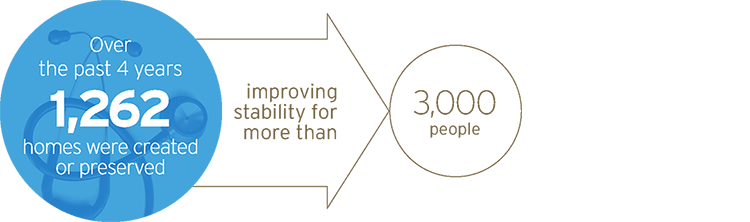
The Housing & Health Initiative continued its mission to increase engagement with and investment in affordable housing by the healthcare sector. Over the past four years, collaboration between GMHF and healthcare partners has delivered a lasting impact across Minnesota, with more than $22M invested in 17 affordable housing developments, creating or preserving 1,262 homes, and improving stability for over 3,000 people.
The Healthcare for Housing Minnesota Coalition — originally formed by the six Healthcare for Housing Fellows representing Allina Health, Blue Cross Blue Shield MN, CentraCare, Children’s MN, Essentia Health, and M Health Fairview — welcomed new members from HealthPartners, Medica, Minnesota Hospital Association, PrimeWest, and UCare. This group of healthcare leaders, who see housing as a key social determinant of health, now convene independently of GMHF and use their collective voice to shape policy and strengthen systems to support affordable housing for Minnesotans.
Together, these efforts are strengthening Minnesota’s affordable housing ecosystem and demonstrating the powerful role healthcare can play in building healthier, more stable communities.

ENERGY LENDING INITIATIVE
In 2025, GMHF’s Energy Lending Initiative advanced key efforts to support energy efficient, sustainable, and resilient affordable housing across Minnesota. The program expanded internal capacity, hosted its first Energy Development Convening, and continued progress on flagship projects like the Native American Community Clinic in Minneapolis and the study of energy technology impacts used in Plover Place in Duluth.
GMHF also secured $11.7M in new public, private, and philanthropic commitments for its Energy Loan Fund, strengthening the ability to deliver innovative financing to support high performance buildings. This work is helping build field capacity by piloting new development approaches, testing creative capital solutions, and sharing insights across Minnesota’s affordable housing ecosystem.
Staff and Board of Directors
2025 STAFF*
Andrea Brennan
President & CEO
Rhiannon Caffee
Senior Loan Closer
Nate Dorr
Senior Program Manager – Rural and Tribal Capacity Building
Peter Ebnet
Director of Policy and Program Development
John Errigo
Managing Director of Equity Investing & NOAH Fund Manager
Melinda Guajardo
Administrative Assistant
Kayla Hemmerle
Asset Management Coordinator
Matt Holland
Controller
Angie Johnson
Director of Capital Development and Investor Relations
Wes Johnson
Director of Lending
John Kieser
Senior Accountant
Crystal King
Director of Communications
and Engagement
Kate Knowles
Senior Financial Manager – Banking and Compliance
Holly Krachmer
Loan Closing Manager
Alexis Lancaster
Operations Manager
Paul Marzynski
Investment Officer
Asher Michels-Allen
Senior Loan Officer
Nikki Mohs
Senior Financial Manager – Asset Management
Dusty Reese
Investment Officer
John Rocker
Managing Director
of Lending
Irene Ruiz-Briseño
Senior Program Manager – Emerging Developers
Marcela Sanchez
Program Coordinator
Megan Sanders
Senior Loan Officer
Jordan Sosa
Financial Manager – Planning and Analysis
Barb Sporlein
Chief Operating Officer
Tyler Thompson
Senior Financial Analyst – Asset Management
Becky Tollefson
Construction Draw Specialist
Evan Uribe
Loan Officer
Mai Yia Yang
Senior Accountant
2025 BOARD OF DIRECTORS
Kim Bretheim
Minneapolis
Housing Studio Leader, LHB Architects, FAIA
Carol Burr
Nett Lake
Planning & Community Development Director, Bois Forte Band of Chippewa
Stephanie Cummings
CHAIR
Duluth
SVP Chief Retail Officer, National Bank of Commerce
Joseph Errigo
West Saint Paul
Retired, President & CEO, CommonBond Communities
Rosymar Hjermstad
Park Rapids
Senior Admission Counselor and Community Outreach Liaison, Metro State University
Natalie Jones
Rochester
Vice President Principal Banker, West Bank, Rochester
Cheryl Key
SECRETARY/TREASURER
Lake City
Wabasha County Commissioner
Stephanie Klinzing
Elk River
Retired, Director, State Housing Agency
Angela Larson
Marshall
Family Services Director, United Community Action Partnership
Jennifer Mendoza
Willmar
Career Development Navigator and Community Liaison, Comunidades Latinas Unidas En Servicio
Todd Prafke
VICE CHAIR
St. Peter
City Administrator, City of Saint Peter
Jorge Prince
Bemidji
Mayor of Bemidji
Zach Tabatt
Little Falls
Vice President for Economic Opportunity, Initiative Foundation
Audra Tonihka
Oqema
Vice President of Lending, White Earth Investment Initiative
Nancy Vyskocil
Dent
Retired, President, Northwest Minnesota Foundation
*GMHF staff as of fiscal year end.
2025 FINANCIAL STATEMENTS
| STATEMENT OF ACTIVITY | 2025 |
|---|---|
| Contributions | 11,669,774 |
| Program Service Revenues | 12,955,532 |
| Amortization of Present Value Discount | 1,070,250 |
| Interest and Dividends, Net | 933,703 |
| Unrealized Gain (Loss) on Investments | 10,840,320 |
| Realized Gain (Loss) on Investments | (861,413) |
| Total Revenue | $36,608,166 |
| Program Services | 14,992,777 |
| Management & General | 2,705,784 |
| Total Expense | $17,698,561 |
| Change in Net Assets | 18,909,605 |
| Net Assets, Beginning of Year | 152,013,638 |
| Net Assets, End of Year | $170,923,243 |
| BALANCE SHEET | 2025 |
|---|---|
| Cash | 5,723,528 |
| Restricted Cash | 9,122,782 |
| Investments, Current | 5,763,869 |
| Accounts Receivable | 2,000,000 |
| Loans Receivable, Current | 27,384,110 |
| Other Current Assets | 474,541 |
| Total Current Assets | $50,468,830 |
| Fixed Assets | 611,028 |
| Long-Term Loans Receivable | 216,248,525 |
| Investments, Net of Current | 72,882,943 |
| Equity Investments | 1,012,190 |
| Other Long-Term Assets | 2,843,188 |
| Total Long-Term Assets | $293,597,874 |
| Total Assets | $344,066,704 |
| Accounts Payable & Accrued Expenses | 3,859,047 |
| Unfunded Commitment Liability, Credit Losses | 803,984 |
| Unearned Revenue | 2,122,001 |
| Notes Payable, Current | 8,644,914 |
| Other Current Liabilities | 787,744 |
| Total Current Liabilities | $16,217,690 |
| Notes Payable, Net of Current | 155,808,033 |
| Other Long-Term Liabilities | 1,117,738 |
| Total Long-Term Liabilities | $156,925,771 |
| Total Liabilities | $173,143,461 |
| Net Assets Without Donor Restrictions | 157,044,505 |
| Net Assets With Donor Restrictions | 13,878,738 |
| Total Net Assets | $170,923,243 |
| Total Liabilities and Net Assets | $344,066,704 |
2025 GMHF Funders
Allina Health
Ameriprise Bank
Blandin Foundation
BMO
CNOTE Group, Inc.
CommonSpirit Health
Douglass Bradenborg Family Foundation
Family Housing Fund
Federal Home Loan Bank of Des Moines
Graves Foundation
Greater Twin Cities United Way
Hugh J. Anderson Foundation
Margaret A. Cargill Philanthropies
McKnight Foundation
Minnesota Climate Innovation Finance Authority
Opportunity Finance Network
Otto Bremer Trust
PNC
Saint Paul & Minnesota Foundation
Sitio Purok
Target Foundation
U.S. Bancorp Impact Finance
U.S. Bank
U.S. Department of Treasury
Wells Fargo
Wilson Foundation
